
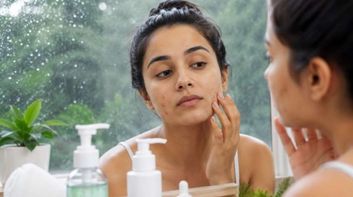
Why does the monsoon trigger more breakouts?
The hot, humid weather during the monsoon creates ideal conditions for acne-prone skin.
Higher humidity increases sweating and can leave the skin feeling greasy. At the same time, excess sebum, sweat, sunscreen, and dead skin cells can accumulate on the skin’s surface. When these combine, they are more likely to block pores, creating an environment where acne-causing bacteria can thrive.
People who already have oily or acne-prone skin often notice this change first, but even those with relatively clear skin may experience occasional breakouts during the season.
Is oily skin the only reason?
Not necessarily.
While excess oil is an important factor, another piece of the puzzle is the skin barrier—the outermost layer of the skin that helps retain moisture and protects against irritation, bacteria, and environmental stress.
During the monsoon, many people respond to oily skin by washing their face more frequently or using stronger acne products. Ironically, this can strip away the skin’s natural protective barrier.
When the skin barrier becomes compromised, the skin is more prone to irritation and inflammation. This can worsen existing acne, increase redness, and make breakouts slower to heal.
Is every monsoon breakout actually acne?
Not always.
The hot and humid weather can also increase the risk of folliculitis, an inflammation of the hair follicles that may be caused by bacteria or yeast. Because it often appears as small, uniform bumps, it is commonly mistaken for acne.
Although acne and folliculitis can look similar, they have different underlying causes and may require different treatments. If your breakouts appear suddenly, are itchy, or don’t respond to your usual acne products, it’s worth getting them evaluated rather than continuing to self-treat.
Should you change your skincare routine?
Your skincare routine doesn’t necessarily need more products—it often just needs the right balance.
During the monsoon, it’s usually helpful to:
- cleanse your skin gently without over-washing
- use a lightweight, non-comedogenic moisturiser to support the skin barrier
- continue wearing sunscreen, even on cloudy days
- avoid layering multiple active ingredients unless advised by your dermatologist
A healthy skin barrier helps the skin tolerate acne treatments better and recover more efficiently from inflammation.
When should you see a dermatologist?
Occasional breakouts during the monsoon are common. However, if your acne becomes more frequent, leaves marks, or isn’t improving with a consistent skincare routine, it may be time for a professional assessment.
As Dr. Sanchit Talwar explains, “Patients often assume they need stronger acne products during the monsoon. In reality, over-treating the skin can further damage the skin barrier, making inflammation and breakouts even more difficult to control.”
A dermatologist can determine whether you’re dealing with acne, folliculitis, or another skin condition and recommend treatment based on the underlying cause rather than simply the season.
The takeaway
Humidity, sweat, and excess oil can certainly contribute to breakouts during the monsoon, but they’re only part of the story. The health of your skin barrier also plays an important role in how your skin responds during this time of year.
Instead of reaching for stronger products at the first sign of a breakout, focus on maintaining a balanced skincare routine and seek professional advice if your acne becomes persistent or difficult to manage.