
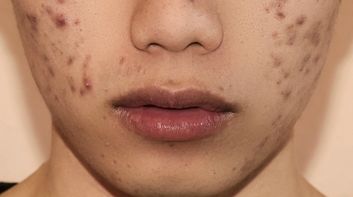
Not all acne marks are scars
One of the biggest misconceptions about acne is that every mark left behind is a scar.
In reality, many people are dealing with post-inflammatory pigmentation—the red, brown, or grey marks that remain after a breakout heals. These marks often improve gradually over several months, especially with sun protection and appropriate skincare.
True acne scars are different. They occur when inflammation damages the skin’s deeper structure, leading to changes in collagen. Once this happens, the skin cannot always return completely to its original state on its own.
Which acne scars are less likely to improve naturally?
Acne scars generally fall into two broad categories: depressed scars and raised scars.
Depressed scars, such as ice-pick, boxcar, and rolling scars, develop when collagen is lost during the healing process. These are the most common type of acne scars and are unlikely to disappear completely without treatment.
Raised scars, which result from excess collagen formation, may gradually soften over time but often persist for years.
While some scars become less noticeable as the skin remodels naturally, significant improvement is usually limited.
Why timing matters
Many patients wait years before seeking treatment because they hope scars will fade on their own.
The reality is that acne scar treatments often work best when active acne is under control and treatment begins before scars become more deeply established.
This does not mean older scars cannot be treated. However, early intervention can sometimes make treatment simpler and more effective.
What treatments can help?
The best treatment depends on the type and severity of scarring.
Options may include:
- microneedling
- laser treatments
- subcision
- chemical peels
- regenerative treatments that support collagen remodelling
In many cases, a combination approach produces the best results because different scar types respond differently.
Why realistic expectations are important
One reason acne scar treatment can be confusing is that patients often expect scars to disappear completely.
Most treatments aim to improve the appearance of scars rather than erase them entirely. However, even partial improvement can create a smoother skin surface and make scars far less noticeable.
The goal is usually meaningful improvement, not perfection.
The takeaway
Acne marks and acne scars are not the same thing. While pigmentation left behind after acne often fades with time, true scars are less likely to go away on their own.
If scars continue to bother you months after acne has healed, it may be worth seeking an assessment rather than waiting indefinitely for further improvement. Understanding the type of scarring is often the first step toward choosing the most effective treatment.