
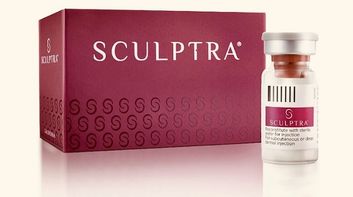
What is Sculptra?
Sculptra is an injectable collagen biostimulator made from poly-L-lactic acid (PLLA), a biocompatible and biodegradable material that has been used safely in medicine for many years.
As we age, our natural collagen levels gradually decline. This contributes to thinner skin, reduced firmness, loss of facial support, and changes in facial contours. Sculptra works by stimulating your body’s own collagen production, helping restore some of this structural support over time.
Because it relies on your body’s natural collagen-building process, the results develop gradually and continue to improve over the months following treatment.
How does Sculptra work?
After Sculptra is injected, the PLLA particles stimulate the skin’s natural healing response. This encourages specialised cells to produce new collagen in the treated areas.
Collagen production takes time, so the improvements appear progressively rather than immediately. As new collagen develops, patients typically notice better skin quality, improved firmness, enhanced facial support, and a subtle restoration of facial volume.
The gradual nature of these changes is one of the reasons Sculptra is often chosen by patients who prefer natural-looking results.
What can Sculptra treat?
Sculptra is commonly recommended for patients who are beginning to notice age-related changes such as:
- loss of facial volume
- reduced skin firmness
- mild to moderate skin laxity
- hollow temples or cheeks
- changes in facial contours
Rather than focusing on a single line or wrinkle, Sculptra helps improve the overall quality and structural support of the skin. The result is a gradual improvement that continues to develop over time.
Sculptra vs fillers: What’s the difference?
This is one of the most common questions patients ask.
Hyaluronic acid fillers and Sculptra are both injectable treatments, but they work in different ways and are often used for different indications.
Fillers restore volume in specific areas and can produce immediate improvement. Sculptra stimulates collagen production, so the results appear gradually as your body responds to the treatment.
As Dr. Sanchit Talwar explains, “Fillers and Sculptra aren’t competing treatments—they solve different problems. Fillers restore volume where it’s been lost, while Sculptra gradually stimulates your own collagen. The right choice depends on what is actually causing the changes you’re seeing.”
For many patients, these treatments are complementary rather than mutually exclusive. During a consultation, your doctor will recommend the approach that best matches your facial anatomy and treatment goals.
How long does Sculptra take to work?
Sculptra is designed to produce gradual improvement rather than immediate change.
Most patients begin noticing visible improvement over the weeks following treatment, with collagen production continuing for several months. Depending on the degree of collagen loss and your treatment goals, a series of sessions may be recommended to achieve the desired result.
Who can benefit from Sculptra?
Sculptra is generally suited to patients who want subtle, natural-looking facial rejuvenation and are comfortable waiting for gradual results.
It may be a good option for individuals experiencing early volume loss, reduced skin firmness, or mild facial laxity. However, it is not the right treatment for every concern, and patient selection plays an important role in achieving good outcomes.
A consultation allows your doctor to assess your facial anatomy, understand your goals, and determine whether Sculptra, fillers, or another treatment is the most appropriate choice.
The takeaway
Sculptra offers a different approach to facial rejuvenation by stimulating your body’s own collagen production. As collagen gradually rebuilds, patients notice improvements in skin quality, firmness, facial support, and overall facial volume.
Like all injectable treatments, the best results depend on careful assessment, appropriate patient selection, and a personalised treatment plan.