
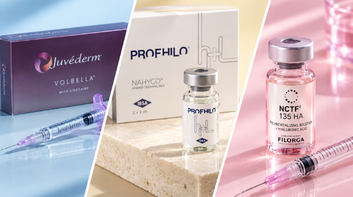
What is the difference between fillers, Profhilo and skin boosters?
Although all three may involve injectable hyaluronic acid, they are not interchangeable treatments.
Dermal fillers are designed primarily to add or restore volume, improve facial contours and correct specific areas of structural volume loss. Depending on the product and area treated, fillers can be used for the cheeks, lips, chin, jawline and other areas where volume or definition needs to be changed.
Profhilo is an injectable hyaluronic acid treatment designed primarily for skin quality. It uses a specific formulation of high- and low-molecular-weight hyaluronic acid and is intended to improve properties such as hydration, elasticity, skin density and mild laxity rather than create the kind of structural volume associated with conventional fillers. Clinical studies and a recent systematic review have reported improvements in measures including hydration, elasticity, skin density and laxity.
Skin boosters are a broader category rather than one specific product. They generally involve injecting a formulation into the skin to improve qualities such as hydration, texture and fine lines. Different skin boosters have different formulations and injection approaches, so they should not all be assumed to have the same effects. Research has specifically identified skin-quality boosters as a category distinct from traditional fillers, with different material properties and clinical indications.
When are dermal fillers a better choice?
Fillers are generally considered when the concern involves loss of volume, facial proportions or definition.
For example, someone with age-related volume loss in the cheeks may benefit from carefully placed filler to restore some of that volume. Fillers may also be used to enhance the lips, improve chin projection or define the jawline when appropriate.
The goal is not simply to add volume. The type of filler, amount used, injection depth and placement all influence the result. Different areas of the face also have different anatomical and aesthetic considerations. Expert consensus recommendations emphasise that filler selection and technique should be tailored to the specific facial area and treatment objective.
When might Profhilo be more appropriate?
Profhilo may be considered when the main concern is skin quality rather than a specific loss of facial volume.
Patients may seek treatment because their skin feels less hydrated, looks less firm or has developed changes in texture and elasticity. Profhilo is designed around these skin-quality concerns rather than conventional facial augmentation.
This distinction matters because someone can have noticeable skin laxity or ageing without actually needing more facial volume. Adding filler when the primary concern is skin quality may not address what the patient is trying to improve.
What are skin boosters used for?
Skin boosters are generally aimed at improving skin hydration and quality, although the exact purpose depends on the specific product.
Some injectable hyaluronic acid formulations have been studied for improvements in hydration, elasticity, texture and other measures of skin quality. However, the term “skin booster” covers several different products, so the treatment should be evaluated based on the actual formulation and its intended indication rather than the label alone.
This is one reason a consultation matters: two treatments marketed as skin boosters may not be equivalent.
Can fillers, Profhilo and skin boosters be combined?
Sometimes, yes. They address different aspects of facial ageing and skin quality, so a combination may be appropriate for some patients.
For example, a person may have both volume loss and reduced skin quality. A treatment plan could therefore address structural volume with a filler while using a skin-quality treatment for hydration or elasticity.
However, combining treatments does not automatically produce a better result. The decision should be based on the patient’s anatomy, skin condition, degree of volume loss and treatment goals.
Which treatment is right for you?
There is no single injectable that is best for everyone.
A useful way to think about the options is:
| If your main concern is… | Treatment that may be considered |
| Loss of facial volume | Dermal fillers |
| Cheek, chin or jawline definition | Dermal fillers |
| Lip volume or definition | Dermal fillers |
| Dehydrated or dull-looking skin | Profhilo or a suitable skin booster |
| Reduced skin elasticity or mild laxity | Profhilo or another skin-quality treatment |
| Fine lines and changes in skin texture | Skin boosters or other skin-quality treatments, depending on the cause |
| A combination of volume loss and skin-quality changes | A personalised combination approach |
These are general categories, not treatment rules. The same concern can sometimes be approached in several ways depending on the patient’s age, anatomy, skin quality and the extent of the change.
How does a dermatologist decide which injectable you need?
The starting point should be the problem being treated, not the name of the treatment.
Dr. Sanchit Talwar assesses factors such as facial structure, volume loss, skin quality, elasticity, proportions and the patient’s desired outcome before recommending an injectable treatment.
This distinction is particularly important with facial ageing. A face can look older because of volume loss, changes in skin quality, altered facial contours, or a combination of these. Treating only one component may not produce the result a patient expects.
The aim is therefore to choose the treatment that addresses the specific change while maintaining natural facial proportions.
Can fillers and skin-quality treatments give a natural result?
Yes, when the treatment is appropriately selected and performed with an understanding of facial anatomy and proportion.
A natural result does not necessarily mean that nothing has changed. It means the treatment improves the feature being addressed without creating disproportionate volume or an obvious change in facial character.
This is why product selection, treatment area, amount and injection technique matter. The evidence and expert guidance around injectable treatments increasingly emphasise treatment selection according to the patient’s specific anatomical and aesthetic needs.
The bottom line
Fillers, Profhilo and skin boosters are all injectable treatments, but they are designed to address different aspects of facial ageing and skin quality.
Fillers primarily address volume and structure. Profhilo focuses on skin quality, including hydration, elasticity and skin density. Skin boosters are a broader category of treatments aimed at improving skin quality, with effects depending on the specific product.
The right choice depends on what has actually changed in your face and skin — and sometimes the best approach is a combination of treatments rather than choosing one injectable over another.
At Talwar Skin Clinics, Dr. Sanchit Talwar assesses these factors before recommending an injectable treatment, with the aim of achieving an appropriate and natural-looking result rather than treating every ageing concern with the same approach.