
Melasma Treatment
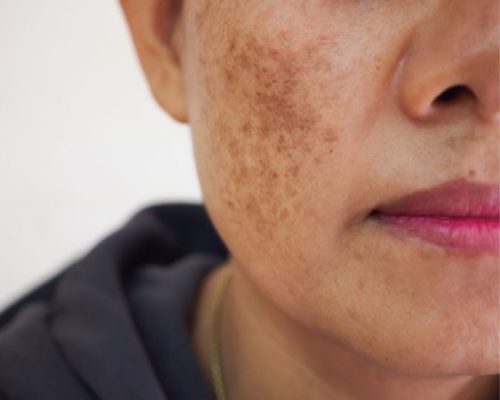
Targeted, dermatologist-led care to correct and control stubborn pigmentation.
Melasma is one of the most common pigmentation concerns among Indian skin types, appearing as brown or grey-brown patches on the cheeks, forehead, and upper lip. It’s often triggered by sun exposure, hormonal changes, and skin inflammation, and can be stubborn to treat without expert care. At Talwar Skin Clinics, Dr. Sanchit Talwar takes a layered, medical approach — combining topical depigmenting agents, advanced peels like Cosmelan and BioRe, and Q-switched Nd:YAG laser sessions — to gradually lighten pigmentation and prevent recurrence, while maintaining the skin’s health and balance.
Research shows that melasma affects nearly one in three women in India — particularly those with medium to darker skin tones. But with the right treatment plan, most patients see visible improvement within weeks.
Source: Indian Journal of Dermatology, 2016
What causes melasma — and why is it so hard to treat?
Melasma is a complex pigmentation disorder influenced by both internal and external factors. It occurs when melanocytes—the pigment-producing cells—become overactive, leading to uneven patches of excess melanin. Indian skin types (Fitzpatrick IV–V) are naturally more reactive to sunlight, heat, and hormonal changes, making melasma more common and often more persistent. In cities like Chandigarh and Ludhiana, where sun exposure and pollution are constant triggers, these factors can further aggravate pigmentation.
Because melasma is multifactorial, effective treatment goes beyond simply lightening the surface pigment—it focuses on calming overactive melanocytes, protecting the skin barrier, and preventing recurrence through maintenance care.
Sun exposure:
Ultraviolet (UV) and visible light stimulate melanin production, worsening existing pigmentation and triggering new patches—especially without consistent sunscreen use.
Hormonal changes:
Pregnancy, birth control pills, or hormonal therapy can disrupt pigment regulation — that’s why melasma is often called the “mask of pregnancy.”
Genetic and skin-type factors:
Melasma is more prevalent in people with medium to darker skin tones, especially those of South Asian descent, where melanocytes are naturally more active.
Heat and inflammation:
Chronic exposure to heat, friction, or inflammation (like after waxing or laser procedures) can worsen pigmentation.
How we treat melasma at
Talwar Skin Clinics.
At Talwar Skin Clinics, we take a multimodal, personalised approach to melasma — because no two cases are the same. During your consultation, Dr. Talwar assesses the depth of pigmentation, skin sensitivity, and triggers such as hormones or sun exposure. Based on this, he designs a custom treatment plan combining in-clinic procedures with medical-grade skincare to gradually restore even skin tone and reduce recurrence.
Our advanced treatment options include:
Cosmelan® Depigmentation Peel – a clinically proven formulation that targets deep-seated pigmentation and regulates melanin production.
BioRePeel – a gentle, biostimulating peel that renews skin and improves tone without downtime.
Q-Switched Nd:YAG Laser Toning – precisely breaks down excess pigment and stimulates natural regeneration.
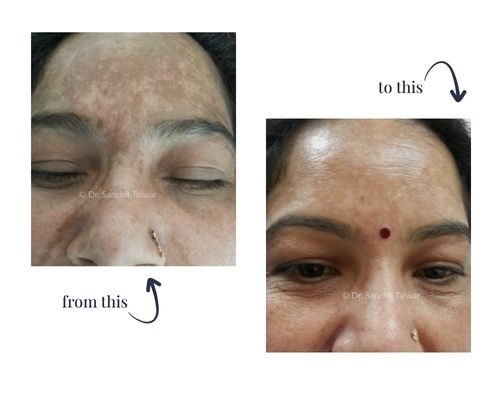
With consistent care and diligent sun protection, most patients begin to notice visible brightening and smoother, more uniform skin within a few weeks.
Melasma FAQs
Melasma is a pigment-disorder where melanocytes (the skin’s pigment-cells) become hyper-active, creating brown or grey-brown patches, often on the cheeks, forehead, and upper lip. Triggers include sun exposure, hormones, heat, and genetics.
While melasma is not dangerous medically, it can be emotionally distressing. Complete cure is often not possible — long-term control with combination treatments and sun protection is key.
Indian skin types (Fitzpatrick IV–V) have higher melanin activity and greater sensitivity to UV, heat and hormonal changes, which increases the risk and recurrence of melasma.
We customize a plan combining advanced options like Cosmelan®, BioRe Peel, and Q-Switched Nd:YAG laser, along with medical-grade topical skincare and strict sun-protection protocols.
Most patients notice visible lightening of pigmentation within weeks; however, maintaining results and preventing recurrence typically involves regular follow-up, barrier repairing skincare, and continuous sun/shield protection.
Extremely important. Even brief sun or heat exposure can trigger melasma flare-ups. Using broad-spectrum sunscreen (SPF50+), wearing protective clothing and avoiding heat/infrared exposures are essential to sustain results.