
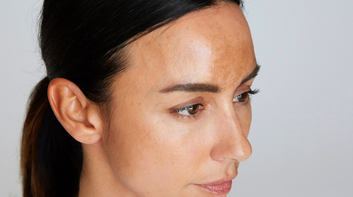
What is the best treatment for melasma?
There is no single “best” treatment for melasma. The right approach depends on factors such as your skin type, the depth and pattern of pigmentation, how long you have had melasma, possible triggers and how your skin has responded to previous treatments.
For most people, treatment begins with consistent photoprotection and topical medication. Other options, including oral treatments, chemical peels, microneedling or laser-based procedures, may be considered when melasma is persistent or does not respond adequately to initial treatment.
This is important because melasma is a chronic, relapsing condition. The goal is not simply to lighten the patches once, but to reduce excess pigmentation while minimising the chance of recurrence.
Why is sunscreen so important for melasma?
Sun protection is a fundamental part of melasma treatment because ultraviolet radiation can stimulate pigment production and make existing melasma darker.
Visible light can also worsen melasma, particularly in people with darker skin tones. For this reason, dermatologists may recommend a tinted broad-spectrum sunscreen containing iron oxides, in addition to other sun-protection measures such as shade, protective clothing and a wide-brimmed hat.
This needs to continue even when the pigmentation has improved. Otherwise, repeated sun exposure can trigger new pigment production and make maintenance of the result more difficult.
Which creams are used to treat melasma?
Topical treatment is often the starting point for melasma.
Depending on the patient, a dermatologist may prescribe ingredients such as hydroquinone, tretinoin, azelaic acid, kojic acid or other pigment-reducing agents. One of the most established prescription approaches is triple-combination therapy containing hydroquinone, tretinoin and a corticosteroid.
However, stronger treatment is not automatically better. Hydroquinone and retinoids can cause irritation in some patients, and irritation itself can contribute to post-inflammatory pigmentation. Current expert guidance therefore emphasises appropriate concentrations, medical supervision and treatment duration rather than prolonged unsupervised use.
Does tranexamic acid work for melasma?
Tranexamic acid has become an increasingly important option for people with melasma that does not respond adequately to topical treatment.
It can be used in different formulations, including topical preparations and, in selected patients, oral tranexamic acid. Studies have found improvements in melasma with oral tranexamic acid, and current expert consensus considers it an option for appropriately selected patients, particularly when conventional treatments have not been sufficient.
Oral tranexamic acid is not suitable for everyone. It is an off-label treatment for melasma in many settings and requires medical assessment, including consideration of a person’s history and risk of blood clots, before it is prescribed.
Can chemical peels help melasma?
Chemical peels can be used as part of a melasma treatment plan, particularly when topical treatment alone has not produced sufficient improvement.
A peel can help remove pigment from the more superficial layers of the skin and may improve overall pigmentation. However, the type, concentration and frequency of the peel need to be selected carefully.
This is especially important in Indian and other darker skin types, where excessive irritation or inflammation can itself trigger post-inflammatory hyperpigmentation. Chemical peels should therefore be viewed as a controlled adjunct to treatment, rather than a stronger version of a home exfoliant.
Does microneedling help melasma?
Microneedling is another procedure that may be used alongside topical treatment.
By creating controlled microscopic injuries in the skin, microneedling can increase penetration of selected topical agents and may contribute to improvement in pigmentation. Evidence supports its use as an adjunct in some patients, although treatment protocols and the quality of evidence vary.
As with chemical peels, the procedure needs to be performed appropriately. More aggressive treatment is not necessarily more effective for melasma.
Does laser treatment work for melasma?
Laser and light-based treatments can improve melasma in some patients, but they are not automatically the first treatment to consider.
Melasma can be particularly sensitive to heat and inflammation, and procedures that are too aggressive can trigger post-inflammatory pigmentation or make the melasma more noticeable. For this reason, current expert consensus generally reserves laser treatment for selected patients, particularly those who have not responded adequately to other approaches.
The choice of device, settings and treatment protocol also matters. A laser being effective for one type of pigmentation does not mean it is appropriate for every patient with melasma.
What is the best treatment for stubborn melasma?
When melasma persists despite treatment, the answer is usually not simply a stronger procedure.
A dermatologist may first reassess the diagnosis, treatment history, adherence to photoprotection and possible triggers. The treatment plan may then be adjusted or combined with another approach.
For some patients, this could mean changing topical medication. For others, a dermatologist may consider oral tranexamic acid, a chemical peel, microneedling or a carefully selected laser or light-based treatment. Current expert recommendations favour a multimodal approach tailored to the individual, particularly for more resistant disease.
How long does melasma treatment take to work?
Melasma usually takes time to improve. Depending on the treatment and how long the condition has been present, noticeable improvement may take several months.
The AAD notes that treatment commonly takes 3 to 12 months, and longer-standing melasma can take more time to respond.
It is also important to distinguish improvement from cure. Even when the pigmentation has cleared significantly, continued photoprotection and an appropriate maintenance plan are often needed because melasma can recur.
Can melasma be permanently cured?
Melasma can often be significantly improved, but there is currently no treatment that guarantees it will never return.
The tendency to develop melasma can persist, and factors such as sun exposure, visible light and hormonal influences can contribute to recurrence. This is why maintenance treatment and year-round photoprotection are important parts of long-term management.
If pigmentation repeatedly returns despite treatment, that does not necessarily mean the treatment failed. It may mean that the underlying triggers or tendency to develop melasma are still present.
How does Dr. Sanchit Talwar approach melasma treatment?
Treating melasma effectively starts with confirming that the pigmentation actually is melasma. Other pigmentary disorders can look similar but may require a different treatment approach.
Dr. Sanchit Talwar assesses factors such as the pattern and depth of pigmentation, skin type, duration of melasma, previous treatments and possible triggers before recommending a treatment plan.
Depending on the individual, treatment may include prescription topical medication, pigment-reducing therapies, chemical peels, microneedling, oral tranexamic acid or selected laser and light-based treatments.
The emphasis is on controlling pigmentation without unnecessarily irritating the skin, while establishing a long-term plan to reduce recurrence. This is particularly important when treating pigmentation in Indian skin, where post-inflammatory pigmentation can be a significant consideration. The 2026 Indian consensus on hyperpigmentation disorders specifically highlights the need for individualised management in skin of colour.
The bottom line
There is no single best treatment for melasma. For most patients, the foundation is consistent photoprotection combined with an appropriate topical treatment, with other medical or procedural treatments added when needed.
The best treatment plan depends on the type and severity of melasma, your skin type, previous treatment response and how prone your skin is to irritation and pigmentation.
If your melasma has become more noticeable, particularly during periods of high sun exposure, a dermatologist can determine what is driving it and recommend a treatment plan designed for your skin rather than simply treating the pigmentation on the surface.